DEREK MUELLERFINE ART & PORTRAITURE
“Whether or not I meet the person I paint, my objective is to learn as much as I can about them—their loves, their interests, and the people and pursuits that bring a sparkle to the eye or a slight smile to the corner of the mouth.”Derek Mueller

Portraits that capture
character and history

View portraits →
Abraham Lincoln, 1860View painting ↗

Selected Portraits

PRIVATE COMMISSIONS · PRESIDENTIAL · HISTORICAL

A few highlights from the portrait collection. Explore the full gallery for more.

View all portraits
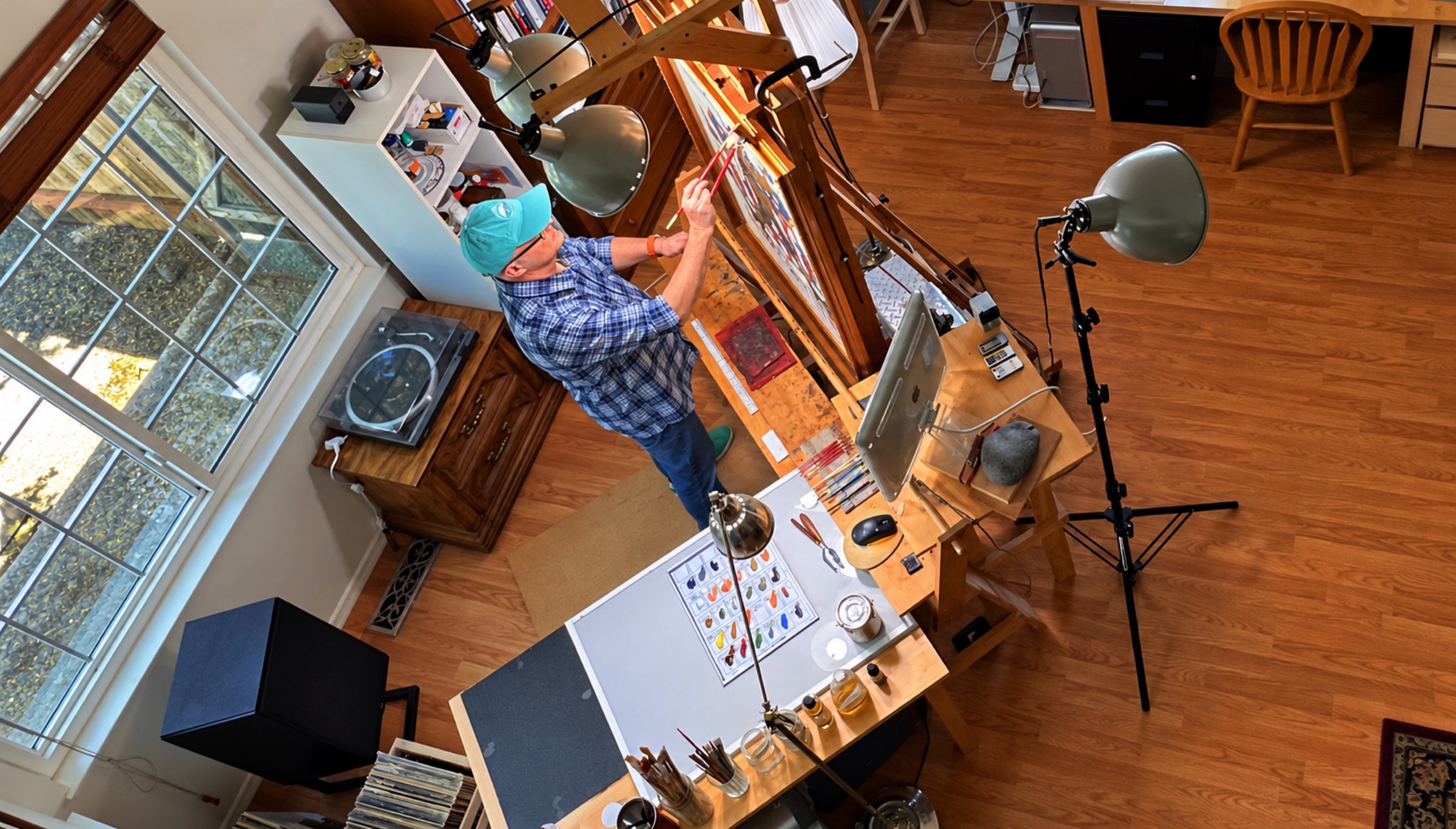
Derek working at the easel in his sunlit studio

IN THE STUDIO

A look inside
the creative process.

A visit to the space behind the paintings — the easel, the materials, and the work in progress.

View the studio playlist on YouTube ↗

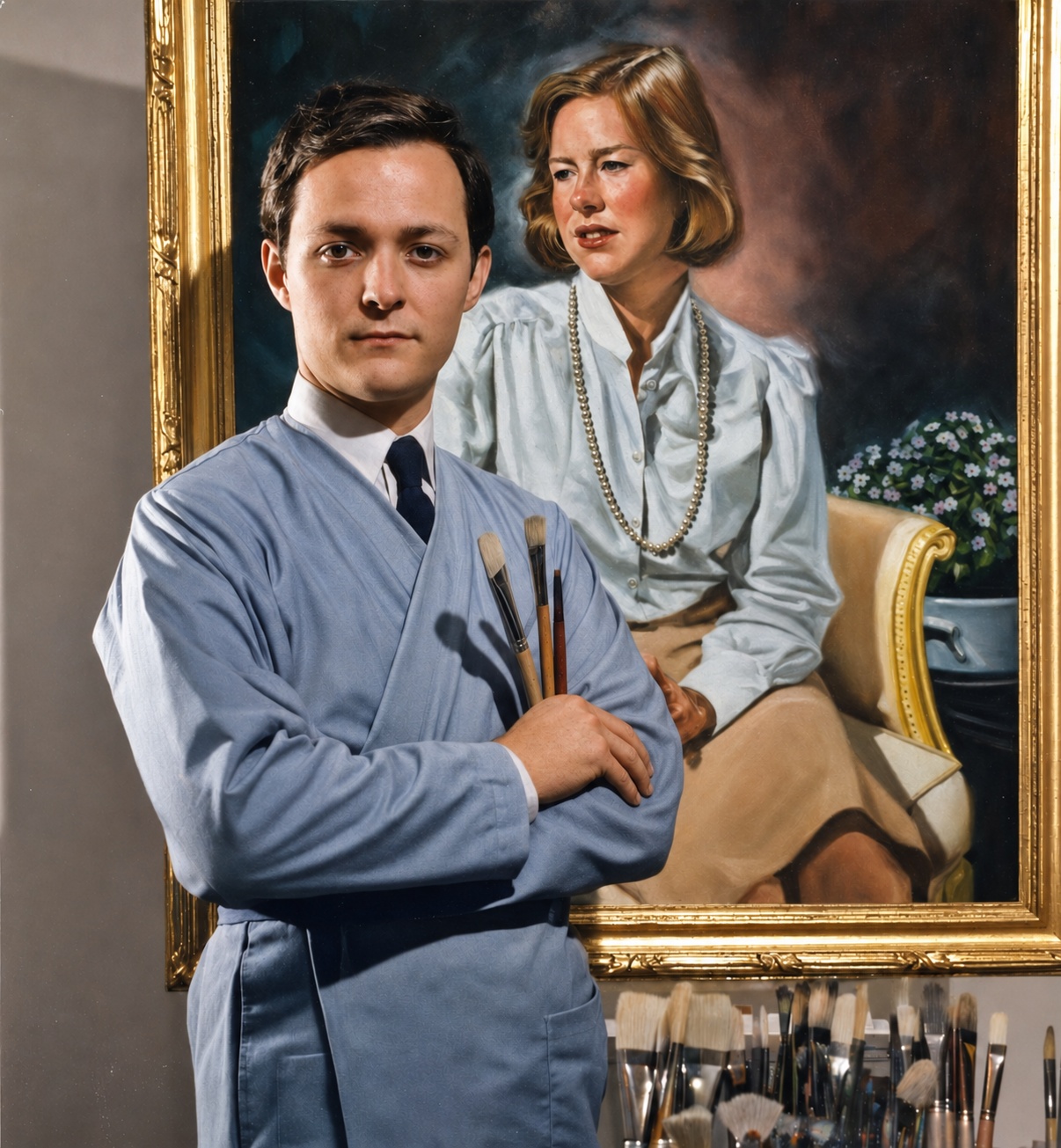
Derek Mueller beside his portrait of Carol, 1990
Derek Mueller · 1990

THE ARTIST & THE WORK

A career in pictures.

Derek Mueller is a portrait painter shaped by a 46-year career in drawing, painting, and illustration. His work seeks the likeness and individual presence of the sitter through close observation and classical realism.

Approximately 25 years in commercial illustration developed the research, composition, and discipline that continue to inform his portrait practice. This retrospective places commissioned portraits at its center, alongside selected historical, narrative, and illustrative work.

Explore commissioned portraits →

View résumé & awards →

FROM THE DRAWING BOARD · 1986

Before the California Raisins danced.

From a Friday brief to a Sunday presentation, Derek created six concept drawings that helped bring an unforgettable advertising idea to life. Discover the original designs, reference photographs, and storyboards behind the campaign.

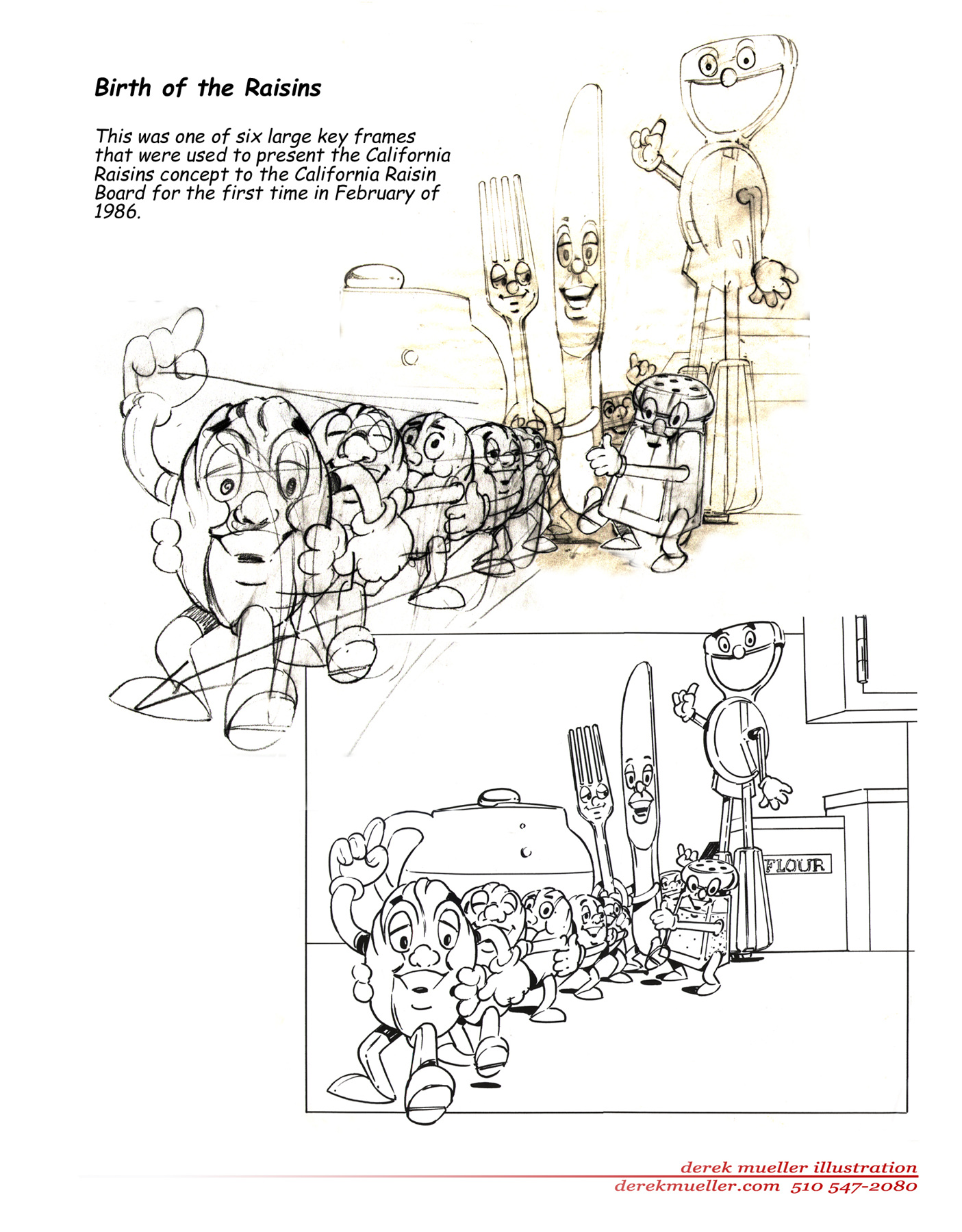
The original character concepts
The original character conceptsDerek’s original presentation drawings.
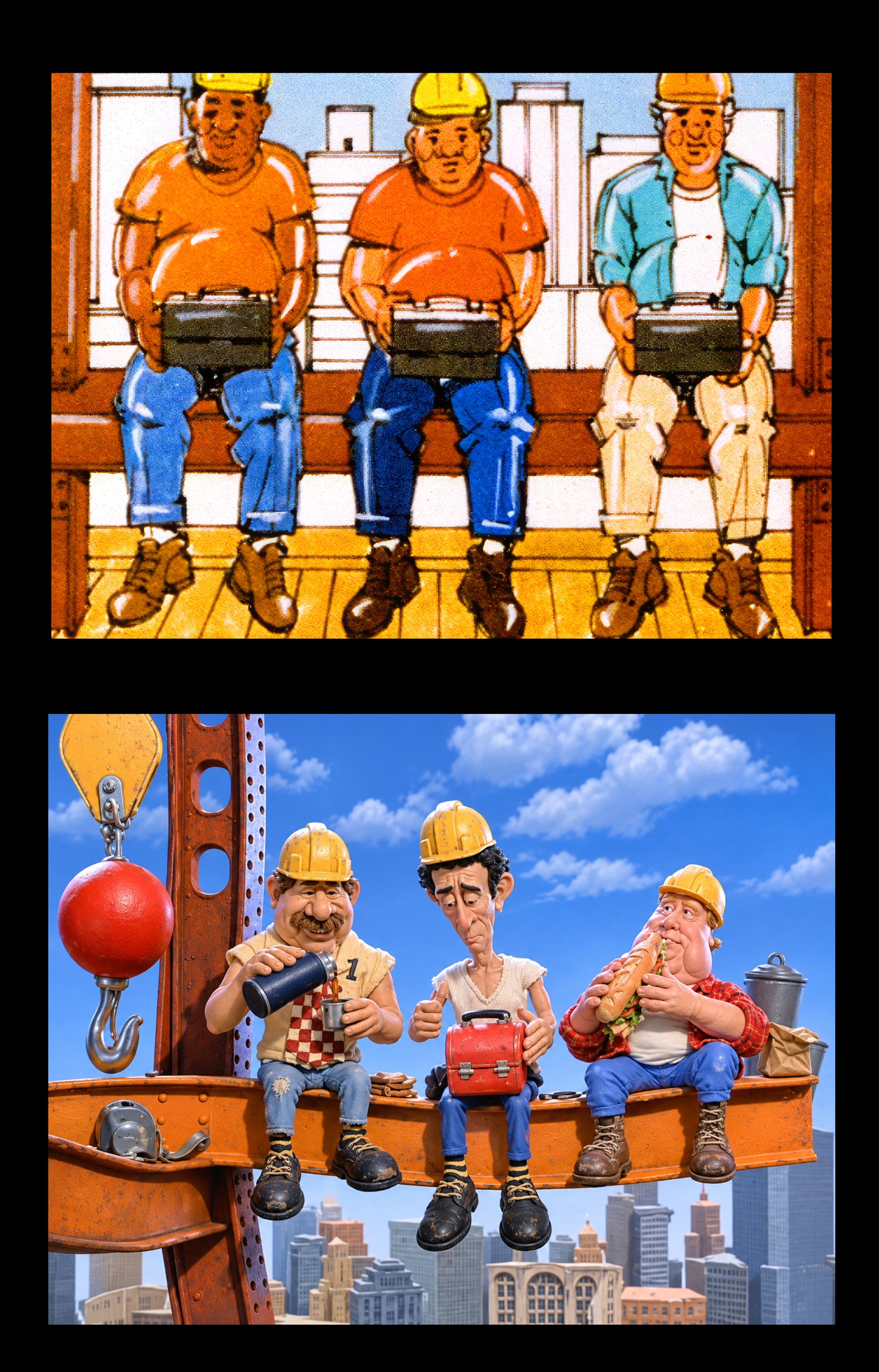
From storyboard to screen
From storyboard to screenA scene from Lunch Box, drawn and animated.
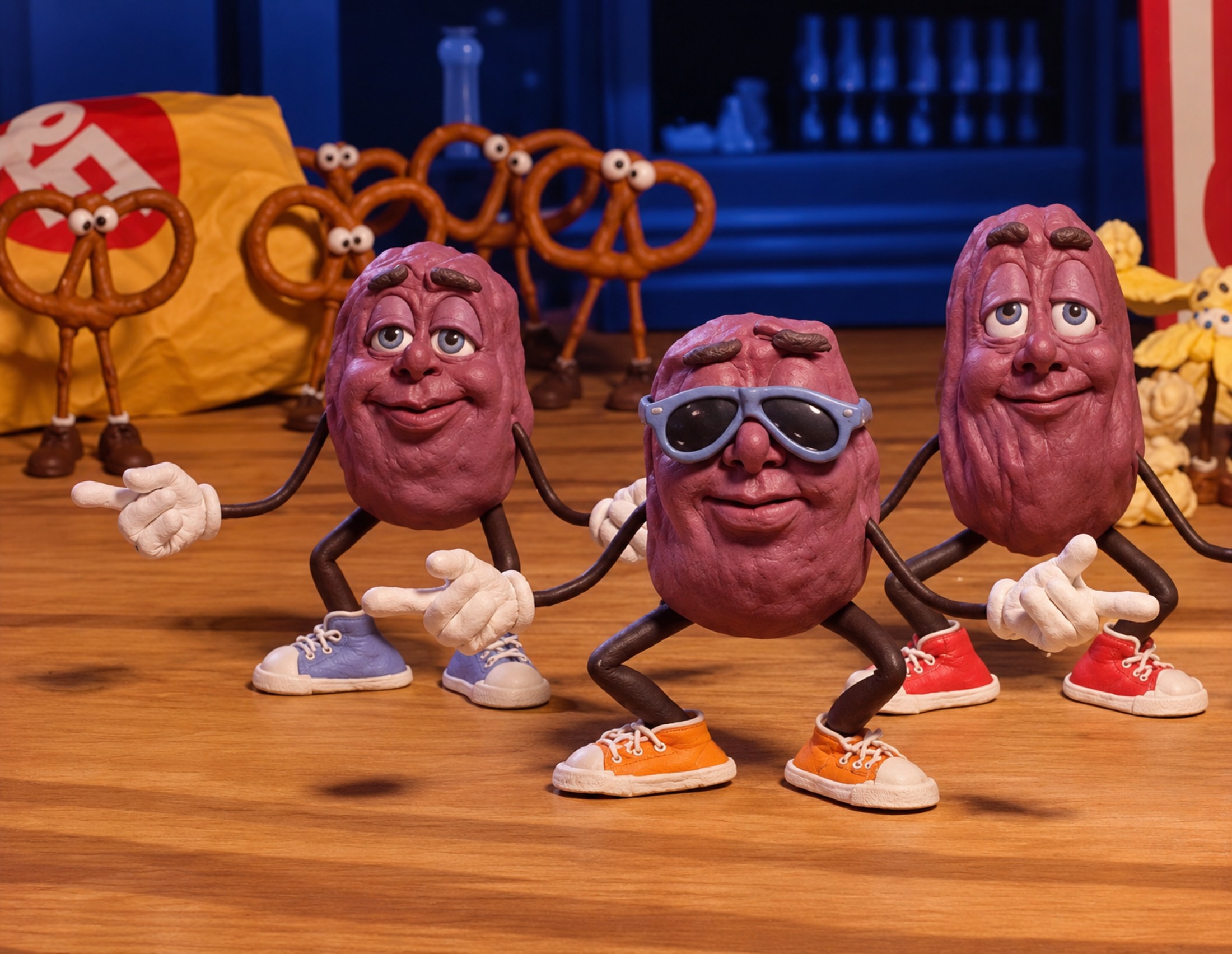
The California Raisins come to life
The California Raisins come to lifeAn enhanced still from Late Show.
Explore the California Raisins story

A PERSONAL RECOLLECTION · 1985

An unexpected visit to
Norman Rockwell’s studio.

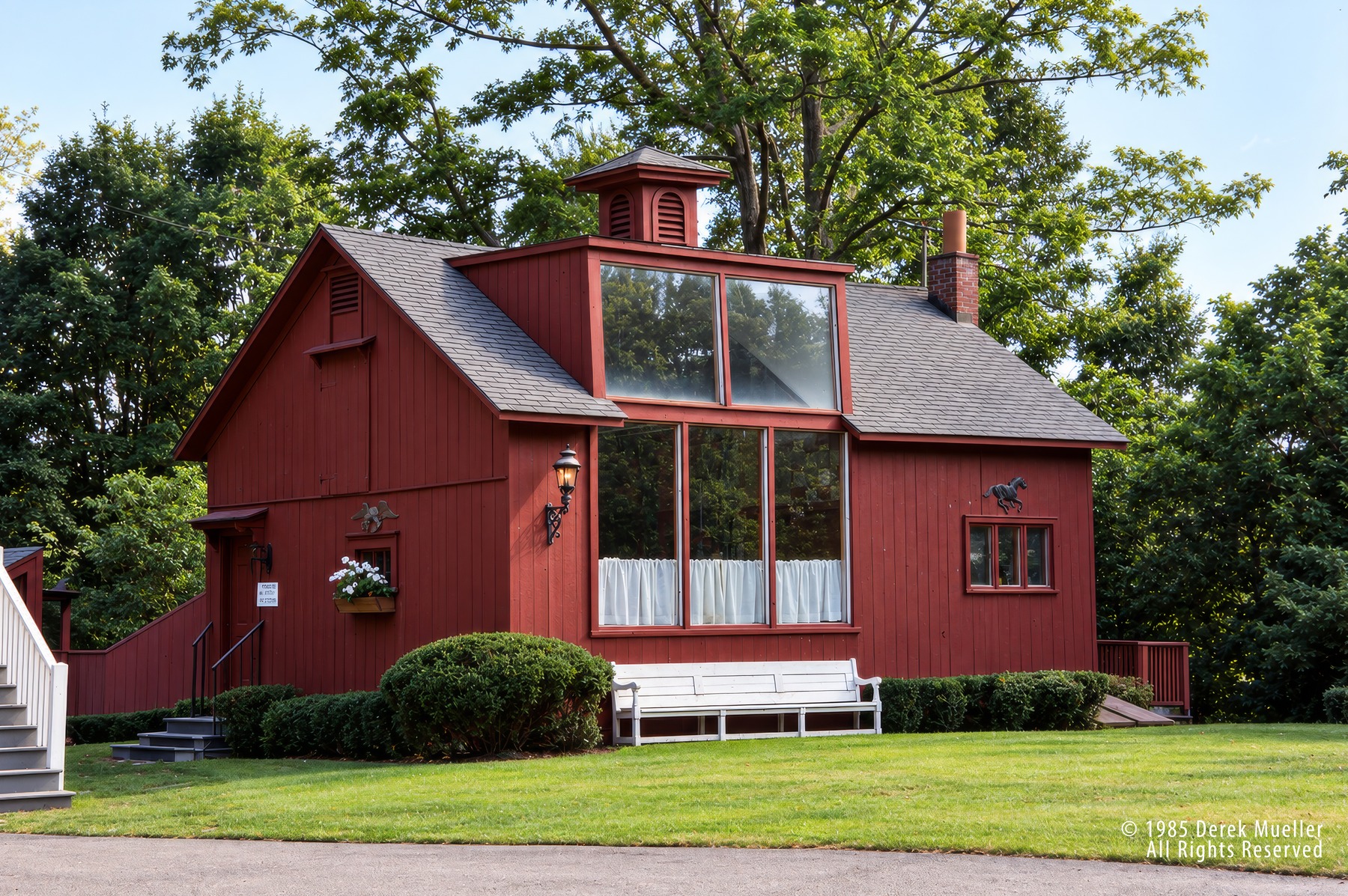
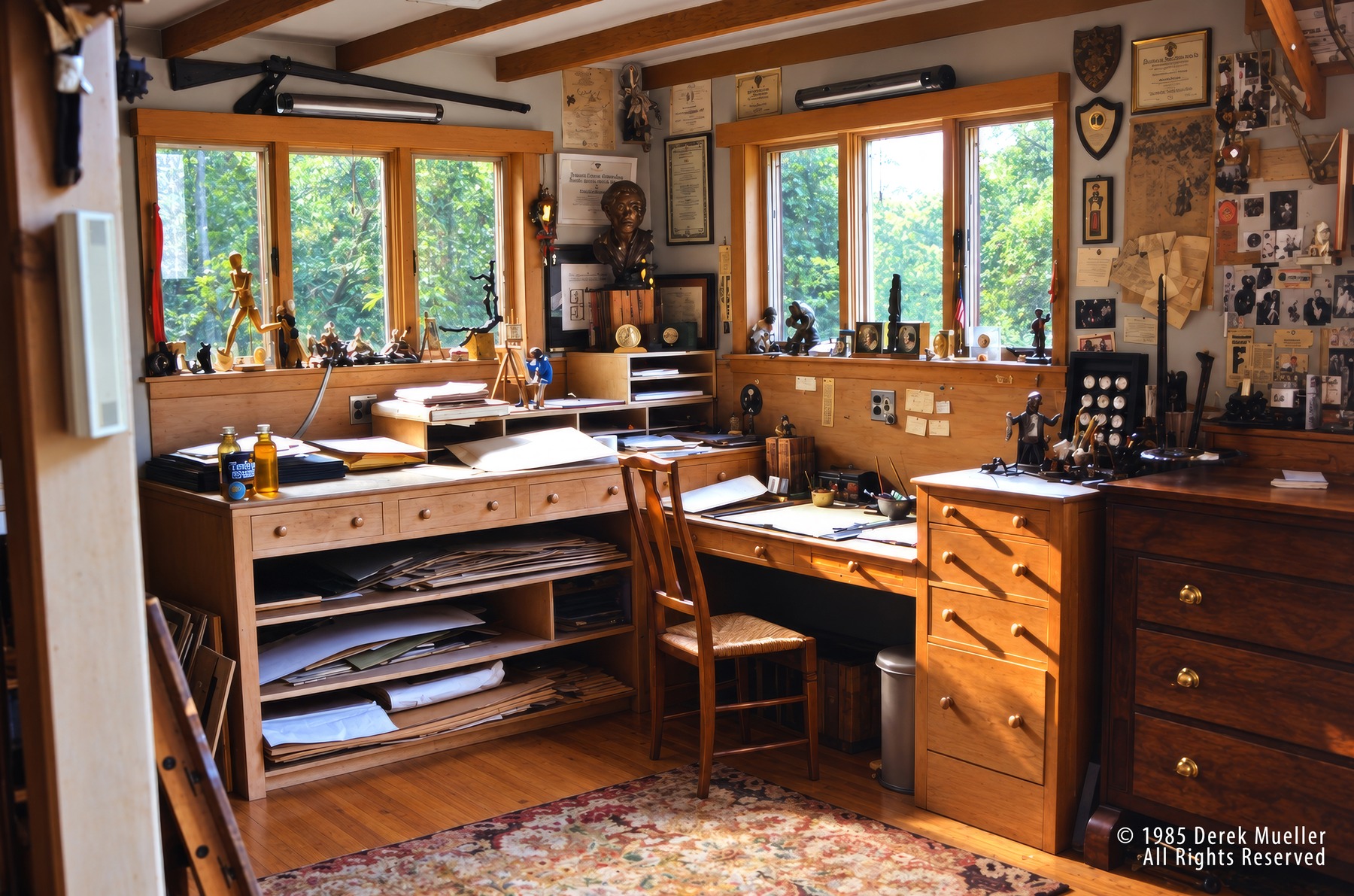
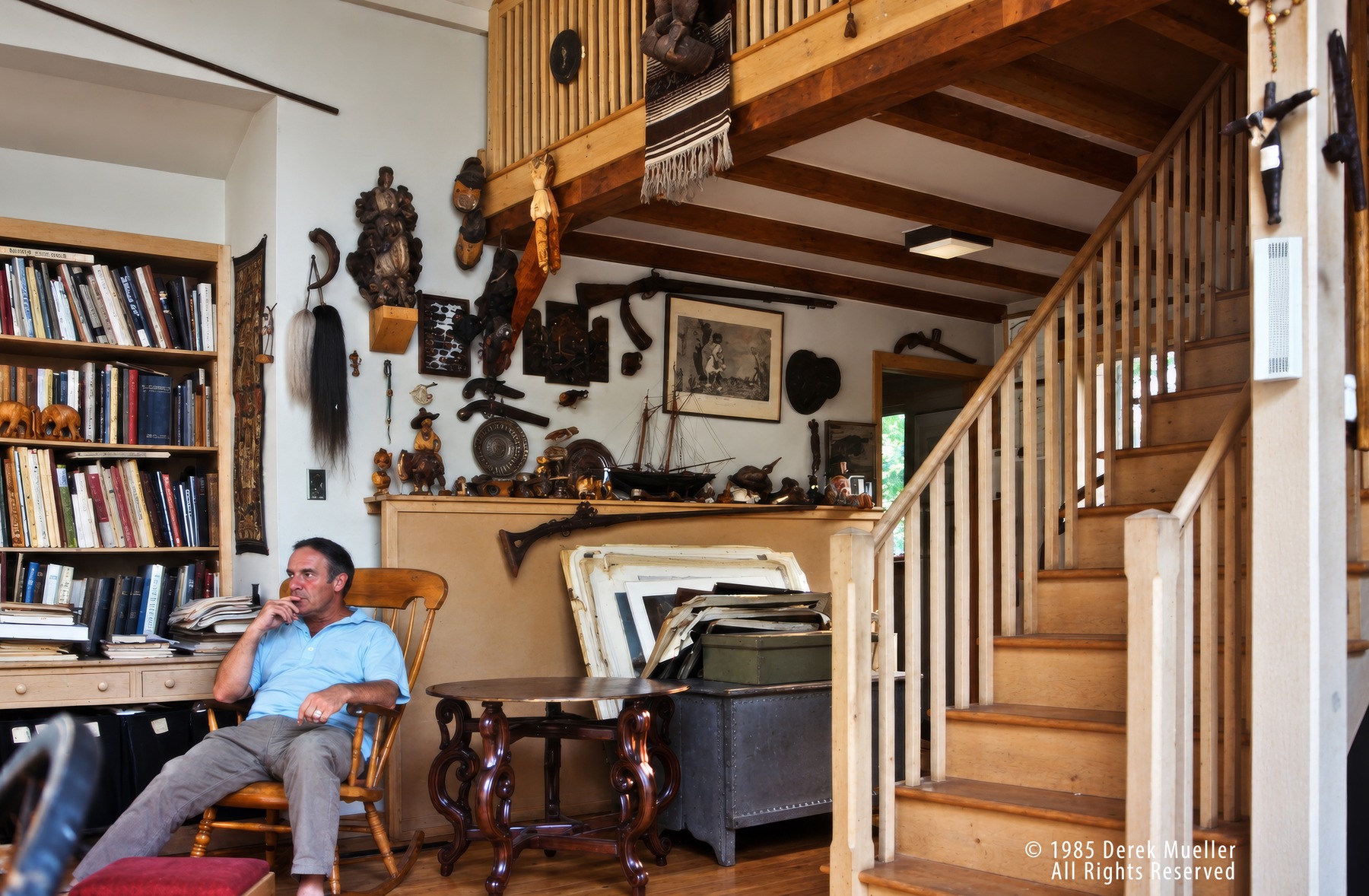
In 1985, Derek met David Wood at the Old Corner House in Stockbridge, Massachusetts. Recognizing Derek’s keen interest in Norman Rockwell, Wood surprised him with a drive to Rockwell’s home and studio.

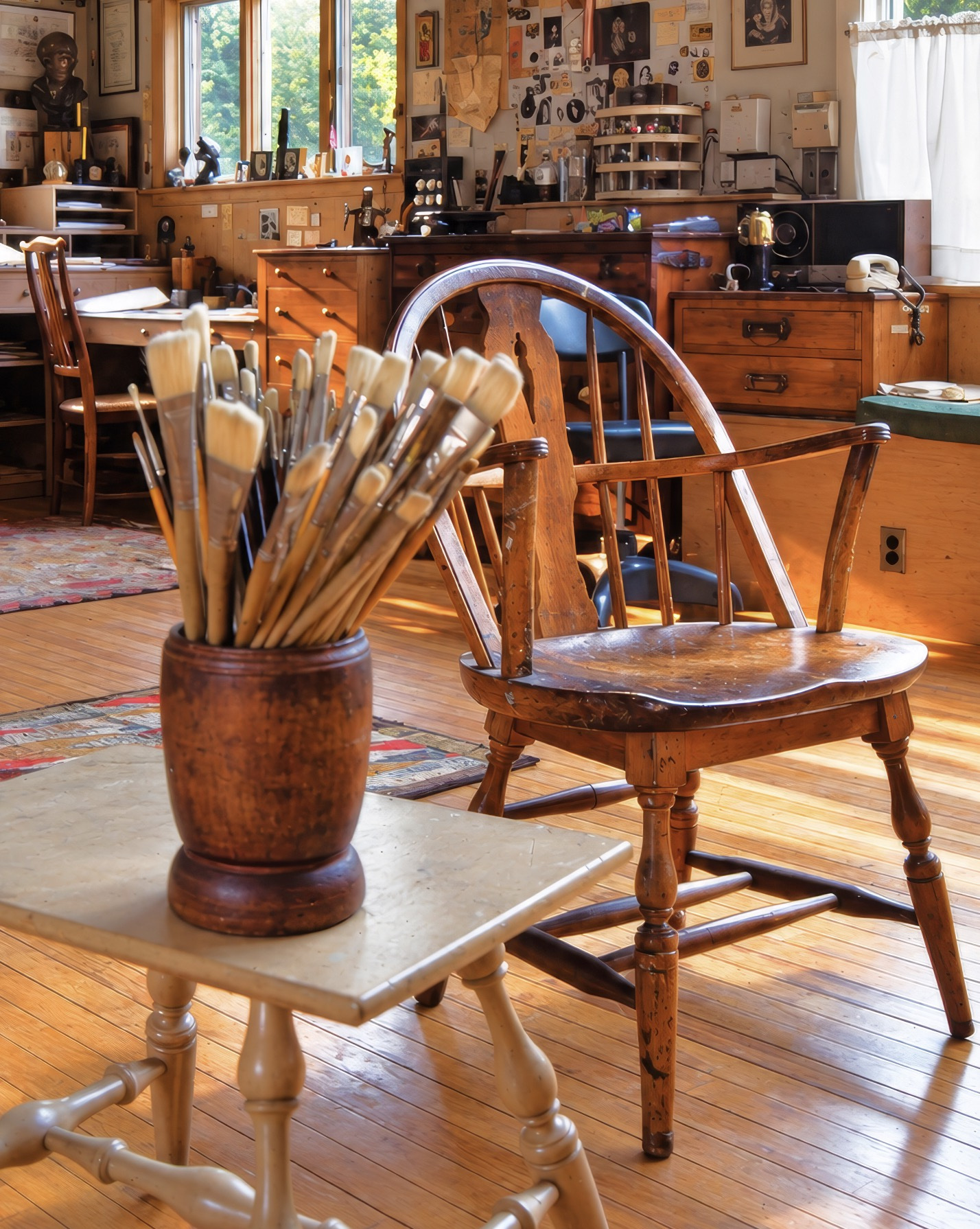
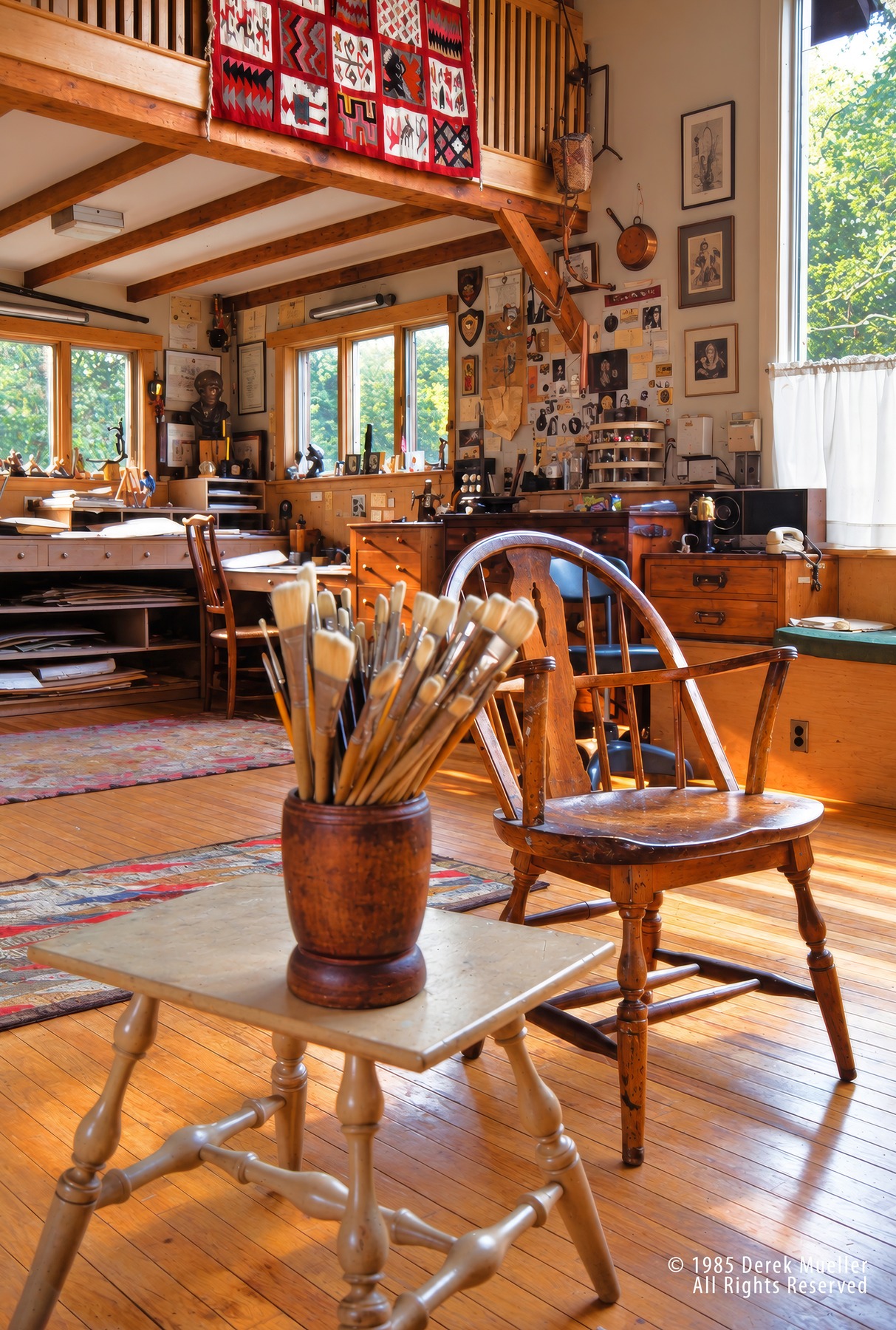
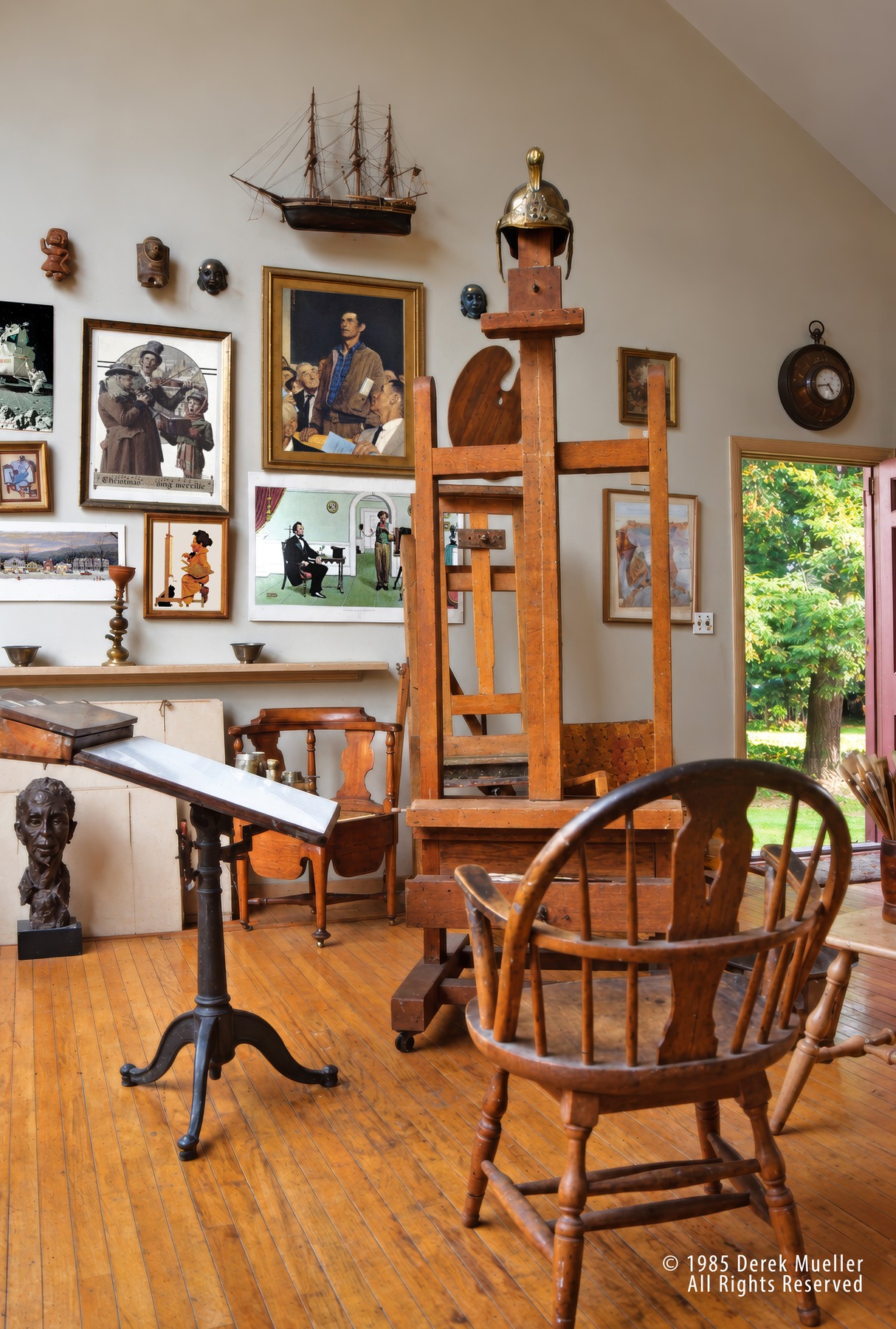
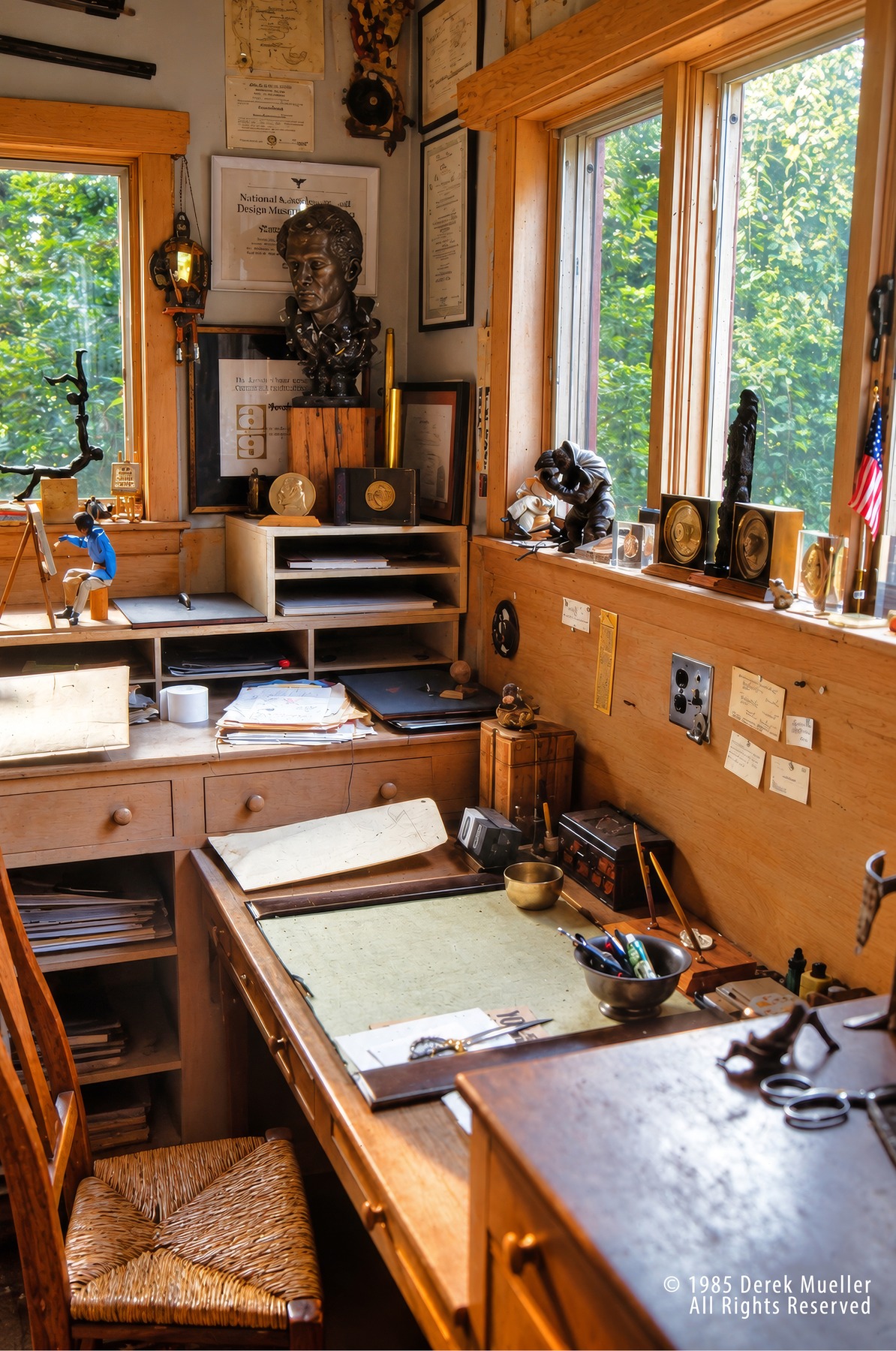
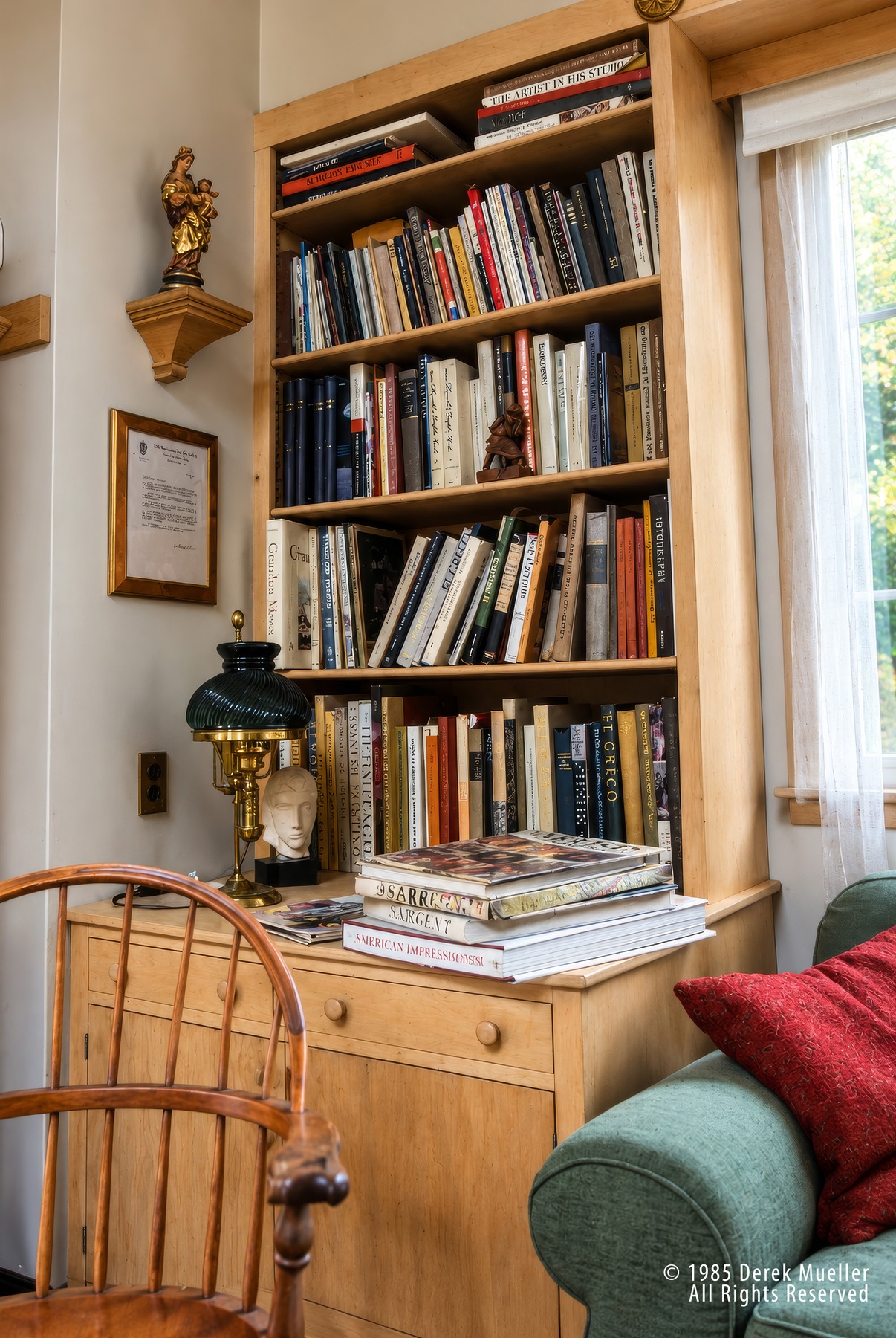
Derek remembers encountering a studio filled with the furnishings, materials, and personal objects of Rockwell’s working life. He photographed what he saw: the easel, brushes, books, workbench, and David Wood seated inside.

The photographs gathered here were taken by Derek during that visit. Together, they preserve his view of the studio in 1985.

Paintbrushes in a wooden container beside a chair in Norman Rockwell’s studio
Brushes and chair in Norman Rockwell’s studio
Rockwell’s studio exterior
Rockwell’s studio exterior · 1985
Brushes, chairs, and the studio interior
Brushes, chairs, and the studio interior · 1985
The easel and studio furnishings
The easel and studio furnishings · 1985
The working area beside the windows
The working area beside the windows · 1985
David Wood seated in Rockwell’s studio
David Wood seated in Rockwell’s studio · 1985
Objects and materials at the workbench
Objects and materials at the workbench · 1985
Books and personal objects in the studio
Books and personal objects in the studio · 1985

Photographs © Derek Mueller · Taken during his 1985 visit

A PORTRAIT, MADE PERSONAL

Commissioning a Portrait

A portrait begins with a conversation about the person it will represent—a spouse, partner, child, parent, or another important person in your life. We discuss their character, interests, and the expression or qualities you would most like the painting to capture.

We also consider where the portrait will hang, helping us determine its size and composition.

View commissioned portraits →

01

A shared undertaking

When the portrait depicts a living person, I ask that they know about and agree to the commission. Their involvement helps us create a portrait they feel comfortable with and that everyone can enjoy. For that reason, I encourage a shared undertaking rather than a surprise gift.

02

Choosing the references

Many commissions can be developed entirely from photographs, allowing us to work together over a distance. We review the available images and select those that best convey the person’s likeness and character. A composition may draw on several photographs, with clothing, background, and personal details discussed together.

When an in-person session is possible, I photograph the subject in the studio. We review the images and take additional photographs as needed until we have suitable references.

I also undertake memorial portraits, working with families to assess the photographs available and develop a fitting remembrance.

03

Composition, pricing, and payment

Each portrait is priced individually according to its size, composition, and complexity. Additional people or animals increase the work involved; an animal is treated as an additional subject when assessing the commission.

I provide a quotation once we have agreed on the size and composition and I can assess the time the painting will require.

A 50% deposit is required before work begins. The remaining 50% is due upon completion and delivery, with shipping added to that final payment.

04

From drawing to finished portrait

For an oil portrait, my process moves from a pencil drawing to a sepia underpainting, followed by the development of the finished painting. Progress photographs can be shared at your request.

Before delivery, I provide a good-quality photograph of the completed portrait for a final review.

05

Framing and delivery

Framing is optional and priced separately from the painting. You may use your own framer, or I can arrange framing through a trusted local framer whose workmanship and judgment I value. If you choose framing through me, I’ll present options for you to consider before a selection is made.

Portraits are usually shipped by UPS, with shipping charged in addition to the painting and any framing. For clients nearby, personal delivery may be possible.

Discuss your portrait →

COMMISSIONED PORTRAITS & ARTWORK

Every portrait begins
with a conversation.

Interested in a portrait or a painting? Share what you have in mind.

derekmueller@comcast.net

Read about the commission process →

Inside the studio

IN THE STUDIO

Studio videos

Explore Derek’s studio video playlist on YouTube.

Watch the playlist ↗

CONTACT DEREK

Start a conversation

Email derekmueller@comcast.net, or fill in the details below to prepare an email. You can review and send it in your mail app.

Derek Mueller at work in his Seattle studio
Derek in his Seattle studio · 2012–14
Eduardo Cerutti, Self-Portrait 1864-1923
Eduardo Cerutti
Self-Portrait · 1864–1923
(Derek’s great-grandfather)
Eduardo Cerutti, Self-Portrait 1896-1956
Eduardo Cerutti
Self-Portrait · 1896–1956
(Derek’s grandfather)

DEREK MUELLER · PORTRAIT PAINTER

Likeness, character,
and presence.

Derek Mueller is a portrait painter whose work grows from a lifelong commitment to drawing, close observation, and classical realism. He is drawn to portraiture for its demanding combination of likeness, character, composition, and technical control—the challenge of making a painting feel like a particular person.

Born in Buenos Aires, Argentina, in 1958, Mueller grew up surrounded by family paintings and art books. His great-grandfather, Eduardo Cerutti, painted presidential portraits and made copies of paintings for family members. Cerutti’s son—Derek’s grandfather, also named Eduardo Cerutti—painted portraits in his spare time. Derek has lived with and studied their paintings throughout his life, an artistic inheritance that helped shape his early interest in representational painting. His family moved to the United States shortly after his birth and settled in the San Francisco Bay Area in 1964.

Norman Rockwell became an enduring influence. First encountering his illustrations in a Boy Scout handbook, Mueller later saw an exhibition of Rockwell’s original paintings and began making small studies from reproductions. Copying offered a practical education in drawing, color, composition, and visual storytelling. His continuing study has also encompassed the work of Rembrandt, John Singer Sargent, J. C. Leyendecker, N. C. Wyeth, Andrew Wyeth, Howard Pyle, and Dean Cornwell.

For approximately 25 years, Mueller worked as a commercial illustrator, producing images for publications and advertising, as well as storyboards. That career demanded clear communication, careful research, and the ability to bring complex subjects into a convincing composition. These disciplines continue to inform his portrait painting.

Since 2010, Mueller has increasingly devoted his practice to fine art. Commissioned portraits occupy a central place in his work, alongside historical and narrative subjects. For him, portraiture presents the most sustained challenge: bringing the demands of painting into the service of an individual likeness and presence.

Professional Background · Education & Career

Education

Stanford University · BA in Communication, 1980

Studied art history, filmmaking, and architecture. Created a five-minute comedy film and, during his senior year, produced the KSZU Quarter Comedy Hour. Contributed illustrations and three covers to Stanford’s Chaparral humor magazine.

Spent six months at Stanford’s overseas campus in Tours, France, becoming fluent in French. Traveled extensively throughout Europe, including Italy, Spain, Belgium, the Netherlands, England, Austria, Germany, and Greece.

Academy of Art College, San Francisco · 1981–1983

Continued his art education at the Academy of Art College.

Awards & Recognition

1991 · Society of Illustrators, New York
Farm Family was selected for the Society’s exhibition and featured in its annual publication, Illustrators 33. Approximately 500 works were selected from 10,000 entries.

1997 · San Francisco Society of Illustrators (SFSI)
Received four awards for outstanding illustration work at the Society’s 1997 show.

Professional Experience

1981–1983 · Bank of America
Graphic designer.
1983 · ArtWorks, San Francisco
Staff illustrator at the studio on Gold Street.
1983–2000 · Freelance storyboards
Storyboard artist for advertising campaigns.
1986 · California Raisins
Created early character concepts and presentation drawings for the original campaign, followed by storyboards for later commercials.
1990–1993 · San Francisco studio
Maintained an art studio at Pacific and Columbus.
1990s onward · Commercial illustration
Created Rockwell-inspired Americana and realist illustrations for advertising agencies and commercial clients, including print advertising and product campaigns.
2010 onward · Portraiture & fine art
Increasingly devoted his practice to commissioned portraiture and fine art, drawing on decades of experience in observation, composition, and visual storytelling.
Explore commissioned portraits →

CALIFORNIA RAISINS · A STORYBOARD ARTIST’S RECOLLECTION · 1986

From a Friday brief
to a Sunday presentation.

Six large key frames. A photo shoot with friends. A weekend at the drawing board.

In 1986, Dexter Fedor at Foote, Cone & Belding in San Francisco asked me to illustrate six concepts for a presentation to the California Raisin Advisory Board. The assignment arrived on Friday. I delivered the artwork to Dexter the following Sunday.

There were no character drawings supplied with the brief. I had to give the idea a visual form—singing, dancing raisin heads with expressive arms, gloved hands, and shoes—and make each scene read at a glance.

“All-nighters were common for me in those days.”Derek Mueller
Giving the idea a visual form
Giving the idea a visual formDerek’s original design page and conga-line concept. Select any image to enlarge it.
  1. FridayThe brief arrives; reference photography begins.
  2. Through the weekendInvent, compose, and draw six large presentation key frames.
  3. The following SundayDeliver the finished presentation artwork to Dexter Fedor.

01 · OBSERVATION INTO INVENTION

The photo shoot came first.

I immediately arranged a photo shoot with a couple of friends. Their poses and expressions gave me the reference for the television-watching couple. I laid a cork board flat so I could use toothpicks to arrange the snack-food characters in the scene. The “raisins” were actually prunes: real raisins were too small to photograph clearly with a Polaroid camera. I combined those elements in a single presentation drawing—a key frame that told the story in one image.

Polaroids were an essential part of my working process. They gave me reference pictures immediately, saving a trip to have film developed. I still have thousands of those photographs stored in boxes.

Reference for the television-watching couple
Reference for the television-watching coupleAI-restored reference photograph; details have been reconstructed.
Staging the snack-food confrontation
Staging the snack-food confrontationAI-restored reference photograph; details have been reconstructed.
Candy, pretzels, and prunes: the reference setup
Candy, pretzels, and prunes: the reference setupAI-restored reference photograph; details have been reconstructed.

02 · THE FIRST COMMERCIAL

Late Show: an idea takes shape.

One of my six key frames showed a conga line dancing across a kitchen countertop. My pencil and ink presentation drawings helped sell the dancing-Raisins concept. Other drawings showed candy and pretzels battling the raisins; those drawings are not reproduced here. The surviving work and reference photographs show how I developed characters, action, and staging under a tight deadline.

Late Show: drawing, reference, and screen
Late Show: drawing, reference, and screenDerek’s surviving drawing and restored reference photographs, alongside AI-enhanced commercial stills.

03 · FROM STORYBOARD TO SCREEN

Lunch Box: drawing the sequence.

After the first commercial was on television, FCB developed further spots. My later storyboards included construction workers discovering a Raisins performance inside a lunch box. These comparisons follow the visual sequence from my drawn panels to the finished animation.

Lunch Box: storyboard and commercial comparison
Lunch Box: storyboard and commercial comparisonStoryboard panels by Derek Mueller; corresponding commercial frames are AI-enhanced. Enlarge to explore the complete collage.
Explore eight individual storyboard-to-screen comparisons
Lunch Box · comparison 1
Lunch Box · comparison 1Derek’s storyboard and the corresponding enhanced commercial frame.
Lunch Box · comparison 2
Lunch Box · comparison 2Derek’s storyboard and the corresponding enhanced commercial frame.
Lunch Box · comparison 3
Lunch Box · comparison 3Derek’s storyboard and the corresponding enhanced commercial frame.
Lunch Box · comparison 4
Lunch Box · comparison 4Derek’s storyboard and the corresponding enhanced commercial frame.
Lunch Box · comparison 5
Lunch Box · comparison 5Derek’s storyboard and the corresponding enhanced commercial frame.
Lunch Box · comparison 6
Lunch Box · comparison 6Derek’s storyboard and the corresponding enhanced commercial frame.
Lunch Box · comparison 7
Lunch Box · comparison 7Derek’s storyboard and the corresponding enhanced commercial frame.
Lunch Box · comparison 8
Lunch Box · comparison 8Derek’s storyboard and the corresponding enhanced commercial frame.

04 · THE FINISHED COMMERCIALS

The drawings become a performance.

Will Vinton and his team in Portland developed the clay characters and brought them to life through painstaking stop-motion animation. My contribution was the early visual concepts and presentation drawings, followed by storyboards for later commercials.

Late Show · the first commercial
Late Show · the first commercialAI-enhanced commercial still.
Lunch Box · a later commercial
Lunch Box · a later commercialAI-enhanced commercial still.

Watch the two-commercial reel · Late Show first, then Lunch Box · approximately one minute. Video cleaned and enlarged from an archival copy.

A personal account by Derek Mueller. Reference photographs shown here are AI-restored, and commercial stills are AI-enhanced reconstructions; fine details may differ from the originals. The original drawings document Derek’s work. Commercial animation by Will Vinton and his team.